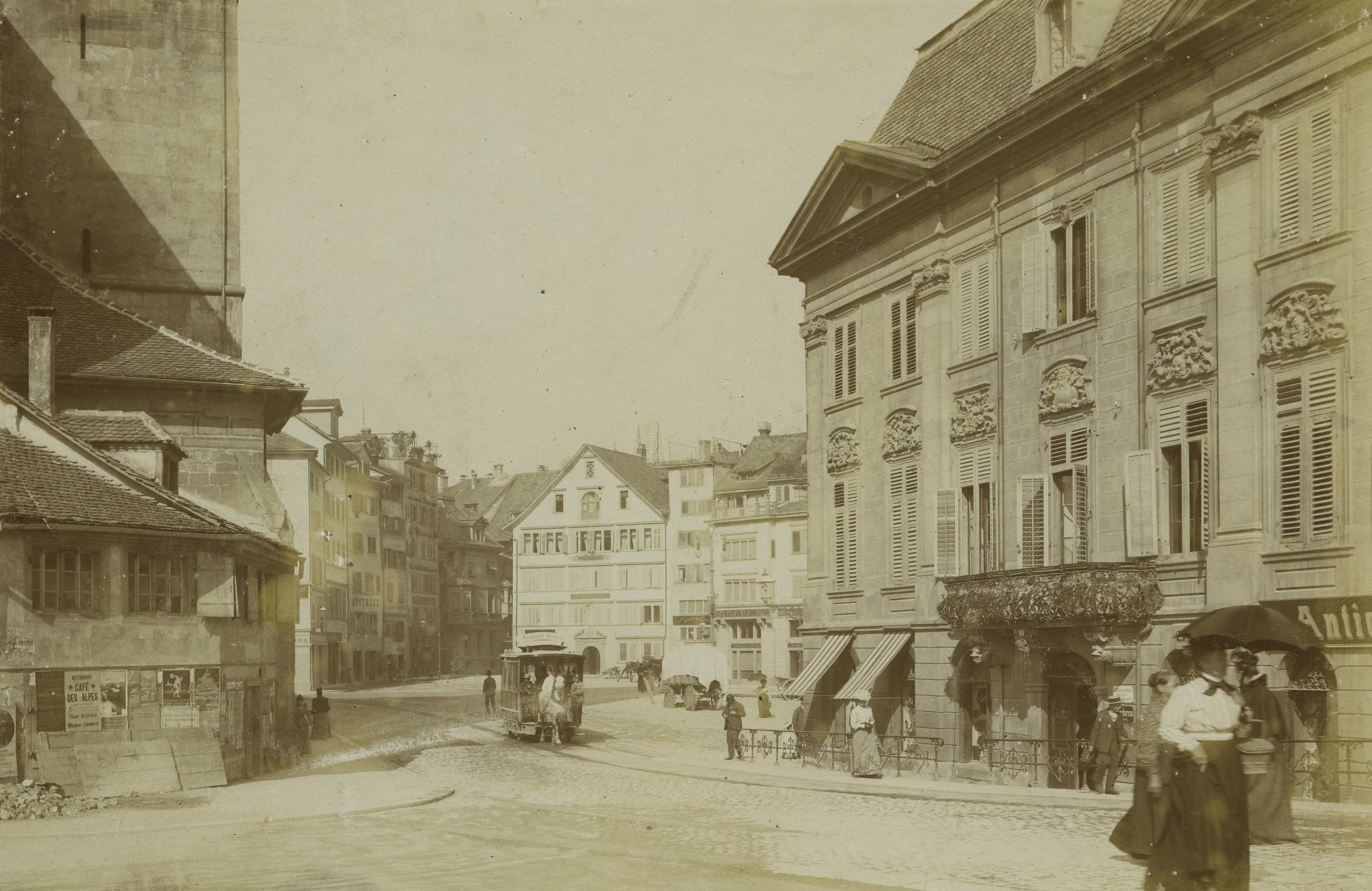
The Waag through the ages
In 1287, Michel, a citizen of Zurich, had a house built on the site of today's Zunfthaus zur Waag. It later passed to the children of the Schultheiss and knight Heinrich Biber (†1304), who sold it in 1303 for 50 pounds of Zurich pfennigs to the three daughters of the late knight Heinrich von Winfelden. The oldest document of the Zunft zur Waag also dates from this year (3 August 1303): a council charter that is kept today in the Waag guild archive at the State Archives. The charter, with its hanging council seal, records the raising of the house on the Münsterhof at that time.
The Waag gets its name
In 1315, the house passed to Master Peter Schmid, a physician and apothecary from Brienz in the Upper Valais, who probably also gave the house the name «zur Waag» («at the scales»). Peter Schmid is known to have been the personal physician of the abbess of the Fraumünster. There may be a connection between his second profession as an apothecary and the scales as the house's emblem.
In 1318, Schmid donated the house to the Altar of Mary Magdalene in the Grossmünster. In 1385, Johannes von Rotenburg, the chaplain of the altar, sold the house for 108 guilders to Ulrich Lütold on behalf of the linen weavers' guild. The linen weavers' guild has owned the house since 1405. In 1440, the guild named itself «zur Waag» after its house. The Waag is one of the seven old guilds that still own their own guild house today.
Building today's guild house
To extend the old guild house, which had meanwhile become too small, the guild acquired the neighbouring house to the east, «Zum geilen Mönch», for 800 guilders in 1630. On the site of these two houses, demolished in 1636, today's «Zunfthaus zur Waag» was built in 1636/37.
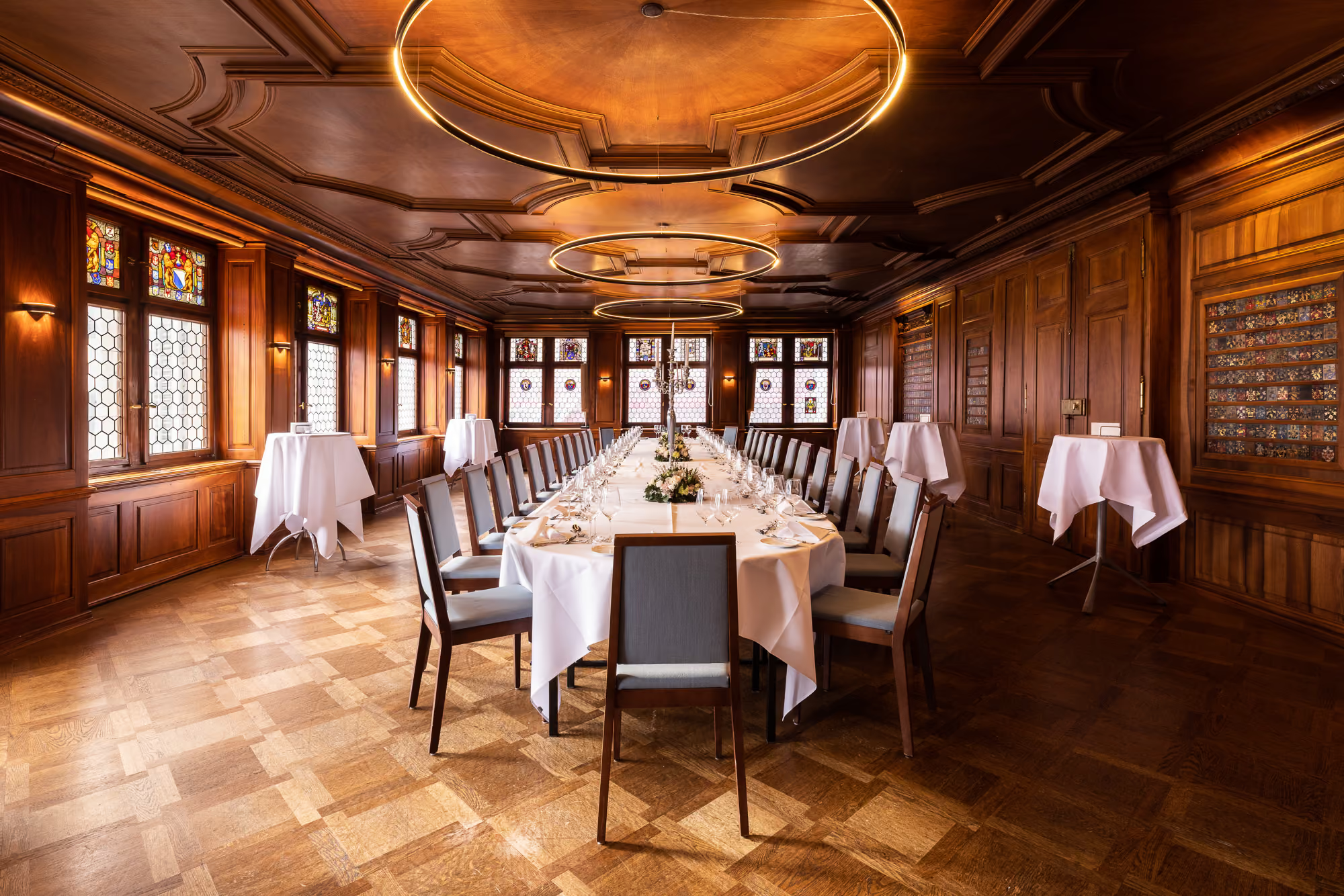
The guild house is predominantly Renaissance in style, with references to the Gothic, particularly in the construction of the rows of windows. During a renovation in 1778, practically the entire interior of the halls was made of walnut.
After the fall of the Old Swiss Confederacy in 1798 and the end of guild rule, the «Zunfthaus zur Waag» passed into private hands by resolution of the guild on 2 June 1801. In this way, the guild avoided the compulsory expropriation of the guild house by French troops. By 1828, the guild house was once again owned by the guild.
Building work I: the facade
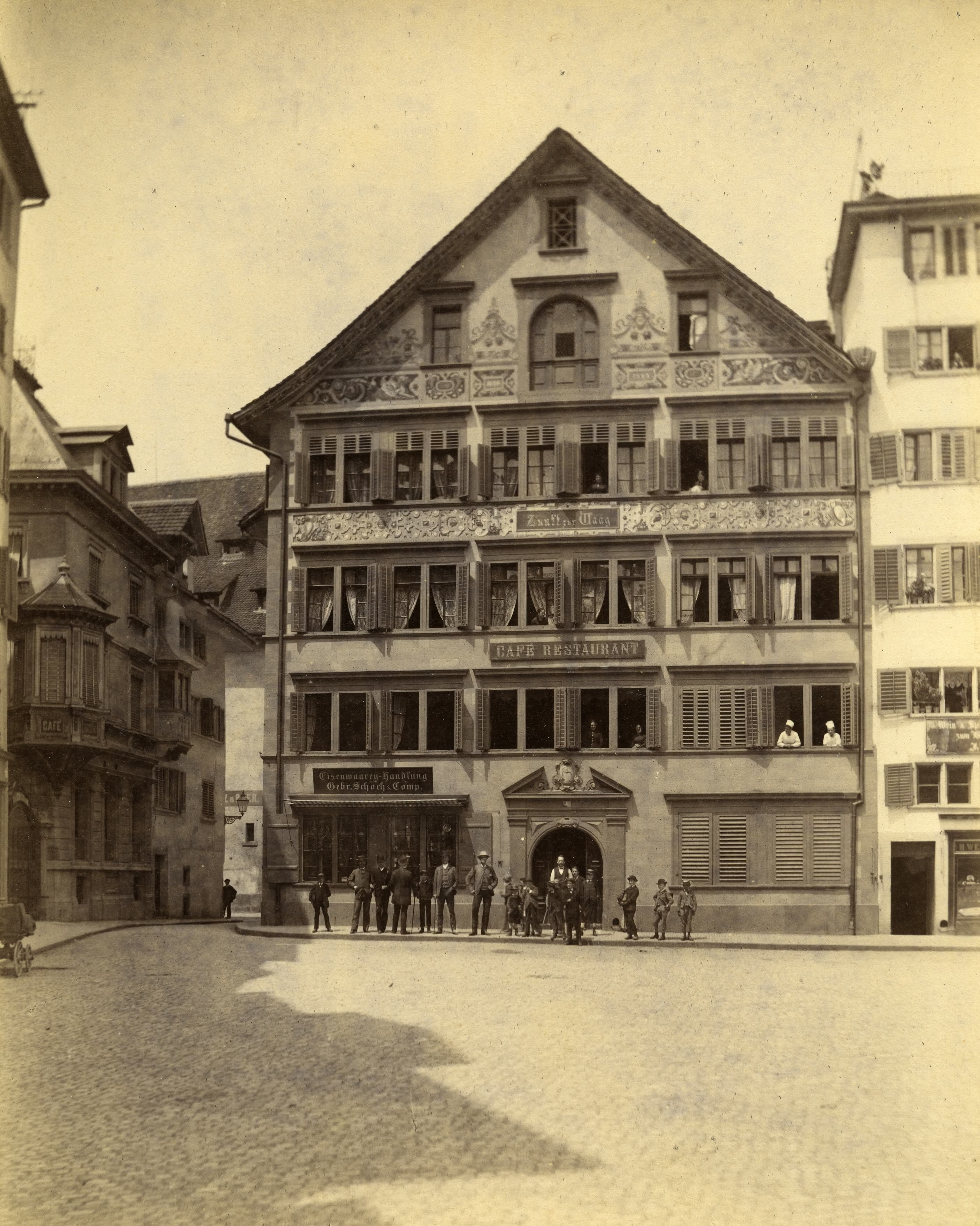
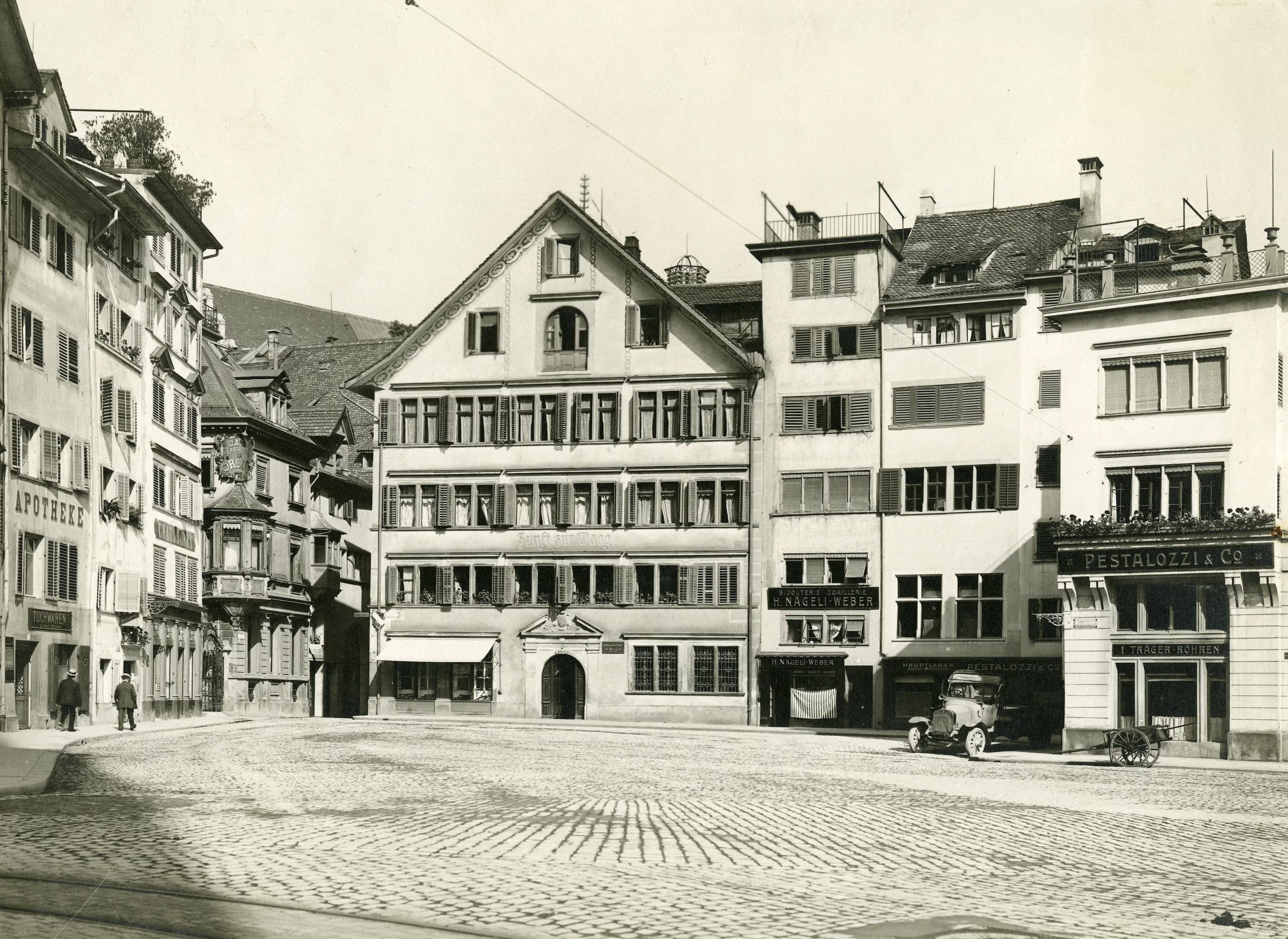
The facade was completely renovated in 1899 and 1909. With its striking width, it stands in marked contrast to the predominantly tall, narrow fronts of the neighbouring houses and dominates the square entirely.
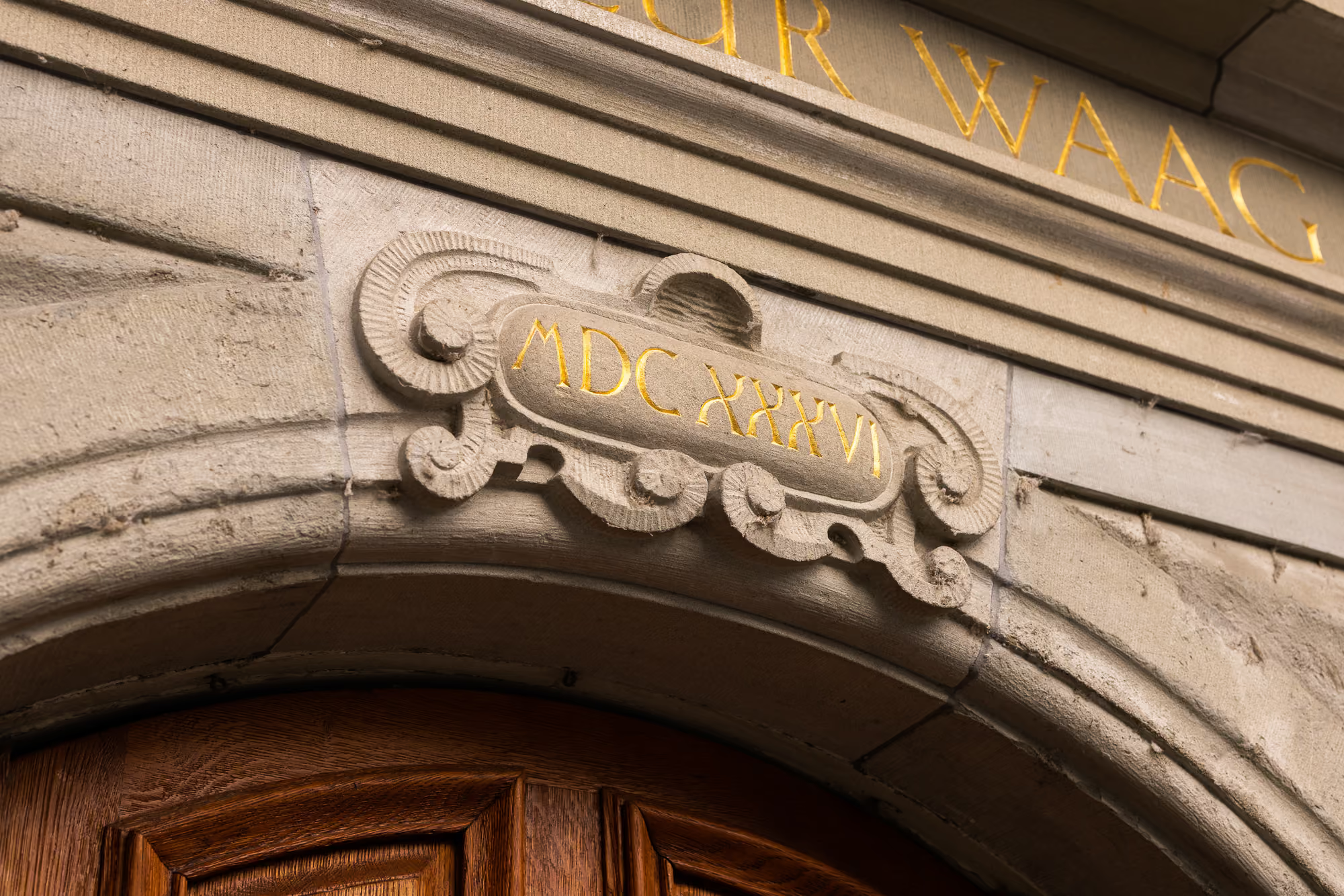
The round-arched portal bears a cartouche (baroque ornament) at its apex with the year the house was built, MDCXXXVI (1636). The carved front door and the doorway arch are flanked by wide Tuscan pilasters.
Building work II: the restaurant and the halls
The heraldic stained-glass windows in the large Zunftsaal were created in 1921–23, and shortly afterwards the entrance hall, staircase and restaurant underwent another major renovation.
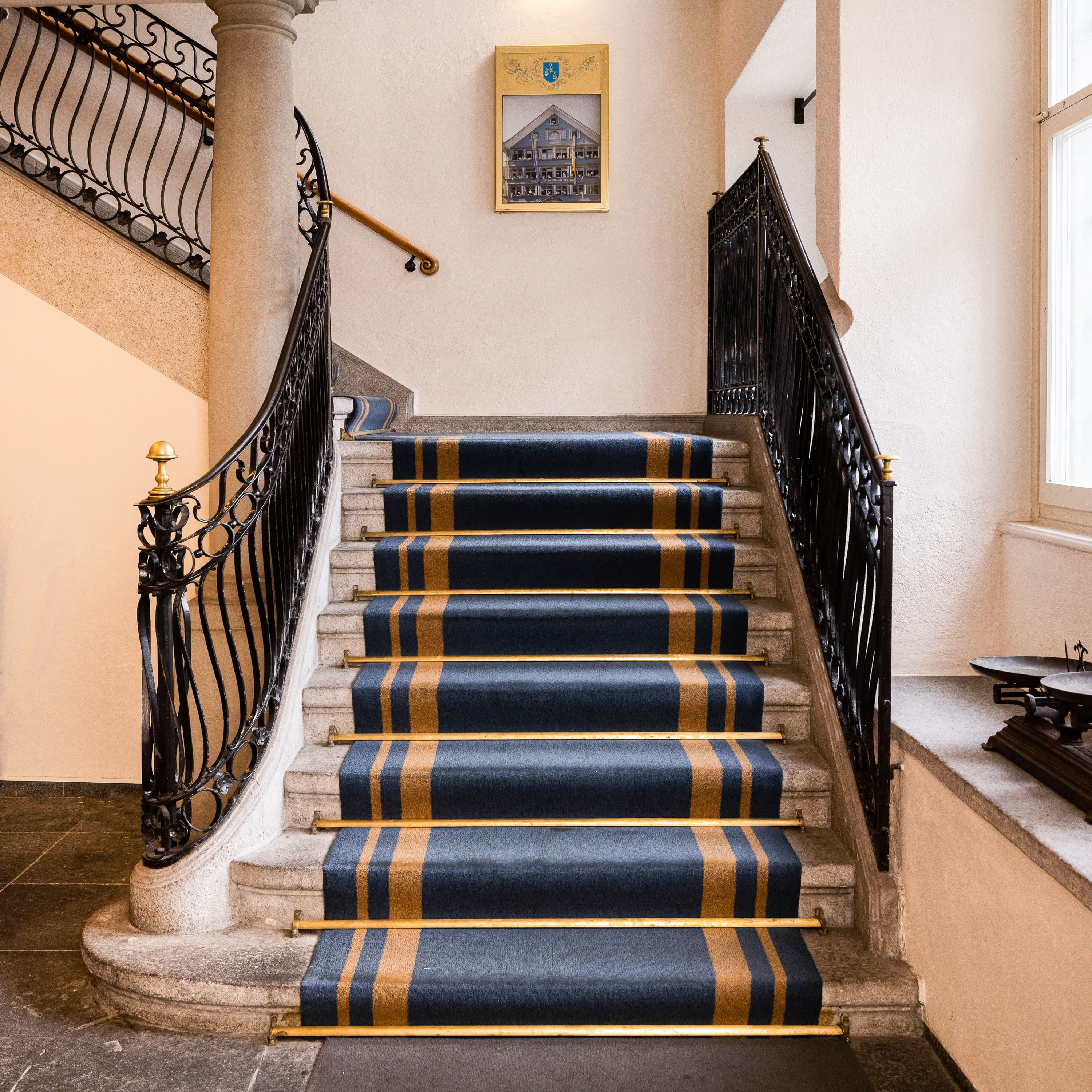
In 2008, the Münsterhof was redesigned and a fountain was once again integrated into the square – with a wine supply to the small drinking fountain, so that the Zunftwirt of the Waag can use it as a wine dispenser on special occasions. In 2014, the restaurant was completely redesigned in the guild colours of blue and yellow.
Living tradition to this day
More than 700 years after its oldest document, the Waag is more alive than ever. Where the linen weavers once gathered, Zurich locals and guests from all over the world now sit at the table. In our historic halls, where people have met, celebrated and raised their glasses for centuries, you can write your own chapter of the Waag's history.
And in our restaurant, you can enjoy good food and warm hospitality in the guild colours of blue and yellow.